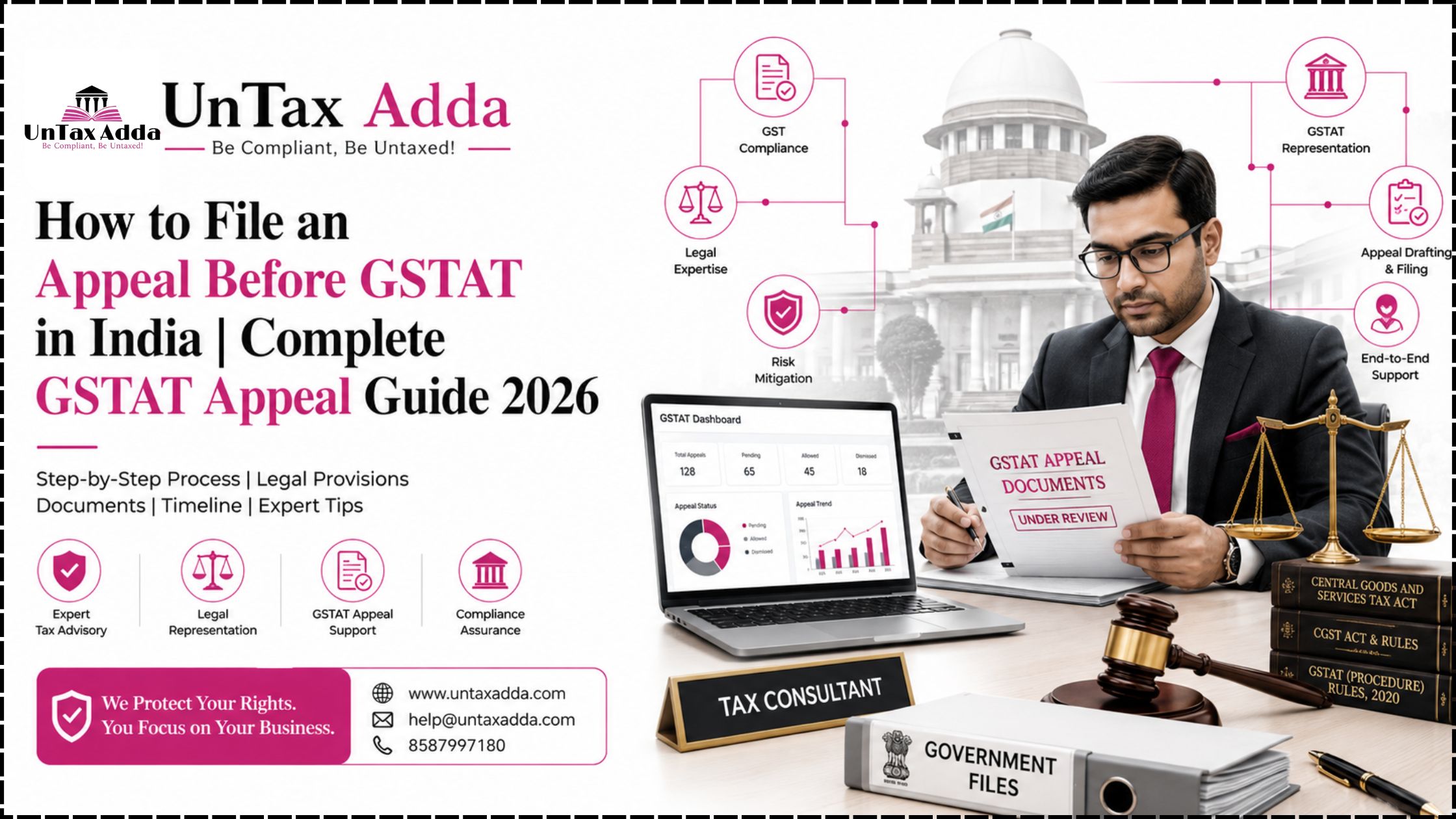
How to File an Appeal Before GSTAT (Goods and Services Tax Appellate Tribunal)
Are you a professional and worried to know how to Appeal before GSTAT?
The Goods and Services Tax Appellate Tribunal (GSTAT) is one of the most significant forums established under the Goods and Services Tax law for resolving disputes between taxpayers and the GST Department. After years of delay, the GST Appellate Tribunal has become operational, enabling taxpayers to challenge orders passed by the First Appellate Authority.
If your GST appeal has been rejected by the Appellate Authority (Sec 107) or a Revisional Authority (Sec 108), the next legal remedy is to approach the GSTAT under Section 112 of the Central Goods and Services Tax Act, 2017.
This guide explains everything you need to know about filing an appeal before GSTAT.
What is GSTAT?
The Goods and Services Tax Appellate Tribunal (GSTAT) is a statutory appellate authority constituted under Section 109 of the CGST Act.
It functions as the second appellate forum under GST laws and hears appeals against:
- Orders passed by the Appellate Authority under Section 107.
- Orders passed by the Revisional Authority under Section 108.
- adjudicating the cases referred to in sub-section (2) of section 171, if so notified under the said section.
Its objective is to ensure uniformity in GST adjudication and provide speedy disposal of disputes.
Legal Provisions Governing GSTAT Appeals
The following provisions regulate GSTAT proceedings:
- Section 109 – Constitution of GSTAT
- Section 110 – President and Members of Appellate Tribunal
- Section 111 – Procedure before Appellate Tribunal
- Section 112 – Appeals to GSTAT
- Section 113 – Orders of GSTAT
- Section 117 – Appeal to High Court
- Section 118 – Appeal to Supreme Court
Who Can File an Appeal Before GSTAT?
Any person aggrieved by:
- Order of the First Appellate Authority
- Order passed under Revision proceedings
may file an appeal before GSTAT.
The Department may also file an appeal if it is dissatisfied with the order.
Time Limit for Filing GSTAT Appeal
General Rule
An appeal should ordinarily be filed within three months from the date of communication of the appellate order or the date, as may be notified by the Government, on the recommendations of the Council for filing appeal before the Appellate Tribunal under this Act, whichever is later.
The Department gets six months for filing departmental appeals.
The Tribunal may condone delay if sufficient cause is shown, subject to the statutory framework.
Special Transitional Timeline (Important)
Since GSTAT became operational recently, the Government prescribed a special one-time limitation for old pending appeals.
Orders communicated before 1 April 2026
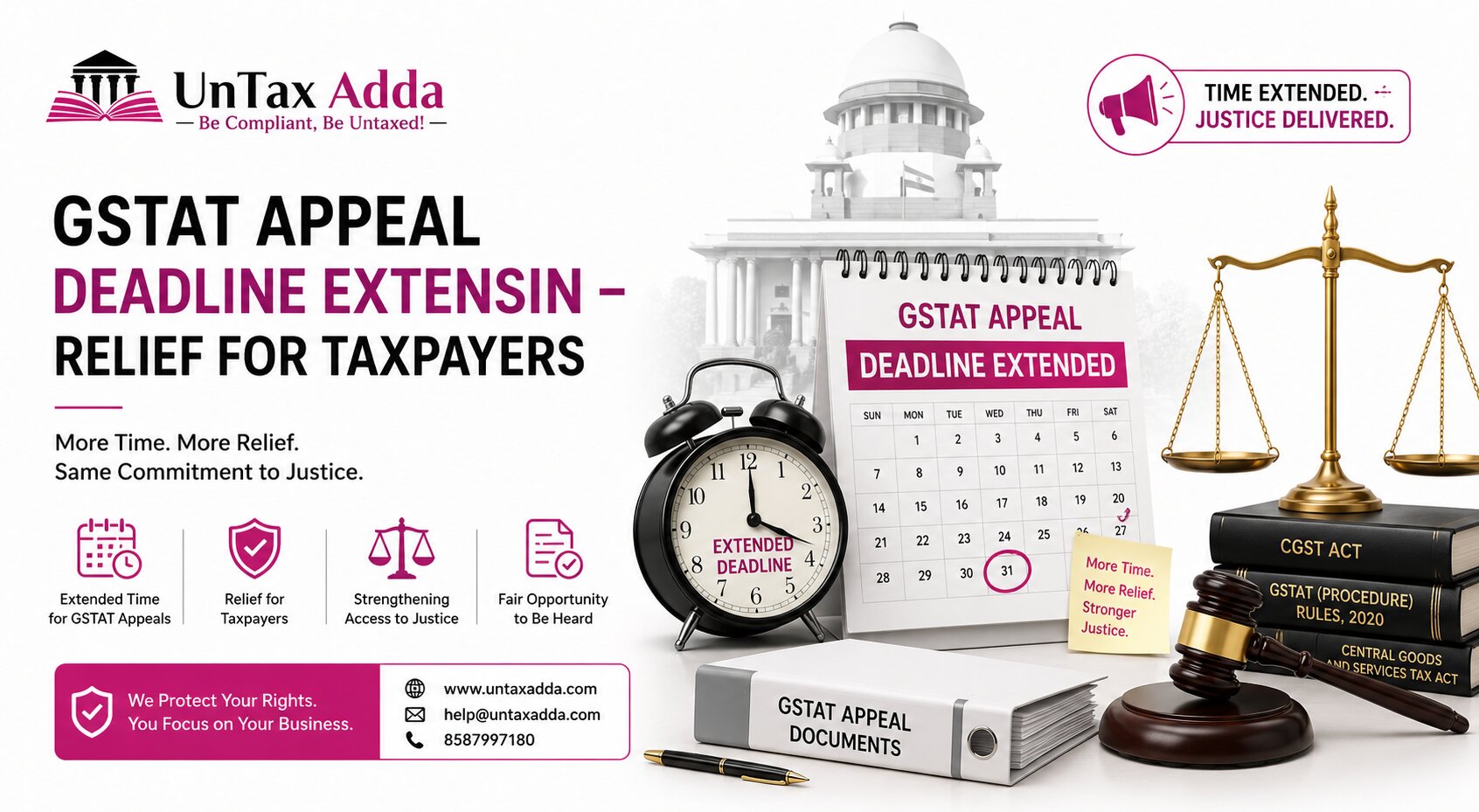
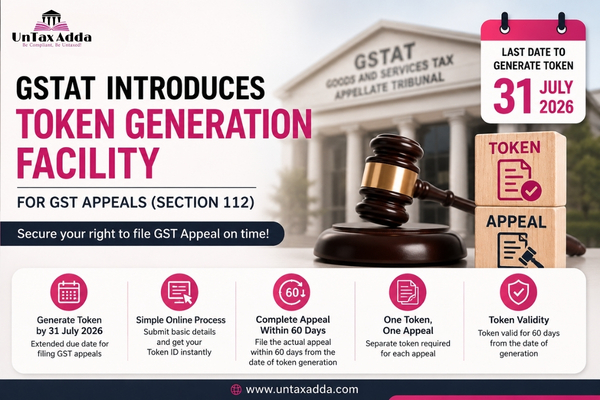
The last statutory date for filing appeals is 30 June 2026. Various Writs have been filed before respective High Court for the purpose of extending the said time limit due to heavy pending of cases and slow functioning of the GSTAT portal. The matter is sub-judice.
Orders communicated on or after 1 April 2026
Normal limitation of three months applies.
Important: The recent extension till 31 December 2026 relates only to the relaxed scrutiny of defects during filing on the GSTAT portal. It does not extend the statutory limitation period for filing appeals. Taxpayers should not confuse procedural relaxation with the limitation deadline.
Pre-deposit Required Before Filing Appeal
To proceed filing an appeal before GSTAT, the appellant is generally required to deposit:
- Entire admitted tax liability.
- Additional statutory pre-deposit prescribed under Section 112 i.e. a sum equal to 10% of the remaining amount of tax in dispute, in addition to the amount paid under sub-section (6) of section 107 arising from the said order subject to max of 20 Crores.
Failure to make the mandatory pre-deposit may result in rejection of the appeal.
Documents Required for GSTAT Appeal
Generally, the following documents are required:
- Copy of impugned order
- Certified copy of APL-01
- Copy of Order-in-Appeal
- Statement of Facts
- Grounds of Appeal
- Index
- Vakalatnama/Authorisation Letter/Board Resolution (if filed through Advocate/CA)
- Proof of payment of pre-deposit
- Relevant invoices and documents
- Annexures supporting the grounds
Frequently Asked Questions (FAQs)
Can GSTAT condone delay?
Yes, subject to the statutory limits and on showing sufficient cause.
Is personal hearing mandatory?
Normally, Yes. However, procedural directions may differ depending upon the Tribunal Bench. In present, filing and appearing both are fully electronically through the GSTAT Portal. Whereas hearing may be attended via link provided by the Appellate Tribunal like Webex or other platform.
Can an Advocate represent the taxpayer?
Yes. Advocates, Chartered Accountants, Cost Accountants, Company Secretaries and authorized representatives may appear as permitted under the GST law.
Can fresh evidence be produced?
Generally yes, where permitted by law and Tribunal, particularly if justified by sufficient reasons.
Conclusion
The operationalization of GSTAT marks a major milestone in India's GST dispute resolution framework. Taxpayers now have a dedicated appellate forum for challenging adverse GST orders.
A successful GSTAT appeal depends not only on legal merit but also on timely filing, accurate documentation, compliance with pre-deposit requirements and well-drafted grounds of appeal. With the introduction of the GSTAT Procedure Rules, 2025 and online filing, the process has become more transparent and efficient. Taxpayers should nevertheless remain vigilant about statutory limitation periods, as procedural relaxations on portal scrutiny do not extend the legal deadline for filing appeals.
If you require professional assistance in drafting, filing or arguing a GSTAT appeal, consult an experienced GST litigation lawyer to safeguard your legal rights.